

Choosing the Right Boutique Amplifier: 2026 Guide

Table of Contents
- Understanding Boutique Amplifiers and What Makes Them Different
- Amplifier Types: Tube, Solid-State, and Modeling
- How to Choose a Guitar Amp for Your Needs
- Boutique Amp Wattage Guide: Power, Volume, and Headroom
- How to Test a Guitar Amp Before Buying
- Are Boutique Amps Worth It? Value, Craftsmanship, and Resale
- Conclusion: Finding Your Signature Sound
- Frequently Asked Questions
Last Updated: October 11, 2026
Understanding Boutique Amplifiers and What Makes Them Different
A boutique amplifier differs from mass-produced alternatives through hand-wired construction, point-to-point wiring, custom speaker selection, and circuit designs that prioritize responsiveness over cost efficiency.
Boutique amps respond to playing dynamics through touch sensitivity, how the amp reacts to picking attack. Built with quality output tubes, matched component values, and transparent signal paths, they deliver articulation and harmonic richness. Clean tones maintain clarity when pushed, overdrive breakup feels natural, and effects integrate with the tone rather than sitting on top of it.
Amplifier Types: Tube, Solid-State, and Modeling
Your choice of amplifier type shapes everything about your tone and how you interact with your gear. Each architecture brings distinct advantages and trade-offs.
Tube Amplifiers: Touch Sensitivity and Natural Breakup
Tube amps remain the gold standard for dynamic response because vacuum tubes compress naturally when pushed hard, creating musical feel and harmonic warmth.
The Benson Redland Reverb 15w demonstrates this principle with 6V6 power tubes and continuously variable power scaling, letting you access power-section compression at bedroom volumes, something solid-state designs cannot achieve.

The trade-off is maintenance: tubes require replacement every 2-5 years and are fragile during transport.
Solid-State Amplifiers: Reliability and Consistency
Solid-state amps use transistors, are more durable, require minimal maintenance, and maintain consistent performance. However, they don't compress naturally when overdriven, resulting in a more digital feel.
Modeling Amplifiers: Versatility and Convenience
Modeling amps use digital processing to simulate classic tube amp circuits, cabinets, and effects. The advantage is versatility; the limitation is latency and lack of organic tube compression.
How to Choose a Guitar Amp for Your Needs
Choosing the right boutique amplifier requires matching your playing style, environment, and sonic goals.
Step 1: Define Your Primary Playing Context
Bedroom and low-volume home use: You need 1-15 watts with power scaling or master volume for breakup at conversation levels. Size and weight matter; anything over 40 pounds becomes a burden.
Small club and studio use: You need 15-35 watts with stable headroom and EQ flexibility.
Medium venue and touring use: You need 50-100 watts minimum for clean headroom at stage volumes. Reliability is paramount.
Step 2: Identify Your Tone Priority
Dynamic responsiveness: If you control overdrive through picking attack and volume knob, you need a tube amp with 6V6, EL84, or 6L6 power tubes that compress naturally.
Clean headroom and articulation: If you stack effects pedals or need pristine cleans at high volumes, prioritize solid-state or modeling amps with transparent signal paths.
Versatility and tone variety: If you play multiple genres in one session, modeling amps or solid-state amps with extensive EQ control serve you better than single-voiced tube designs.
Step 3: Establish Your Budget Range (Including Total Cost of Ownership)
Tube replacement cost:
Cabinet and speaker requirements: Head-only designs require separate cabinets; combo amps include speakers. Factor this into total cost.
Attenuator or power-scaling needs: For high-wattage amps at low volume, you may need an attenuator. Some boutique amps include power scaling; others don't.
Resale value and effective cost:
Step 4: Create Your Shortlist Using These Filters
Apply these filters:
- Wattage: Match to your context (1-15W for bedroom, 15-35W for small venues, 50-100W for touring).
- Amp type: Tube for dynamic responsiveness, solid-state for headroom and consistency, modeling for versatility.
- Feature set: Does it have power scaling, reverb, effects loop, or EQ flexibility you need?
Boutique Amp Wattage Guide: Power, Volume, and Headroom
Wattage measures power output, not volume. Loudness follows a logarithmic scale; you need roughly double the wattage to perceive a 3dB increase in volume.
How Wattage Translates to Real-World Volume
Wattage and perceived loudness follow a non-linear relationship:
- 1-5 watts: Bedroom practice at apartment-friendly volumes; a 5-watt tube amp at full volume equals a 15-watt amp at 50% volume.
- 15-35 watts: Small clubs, studios, and rehearsal spaces; a 15-watt amp fills small venues without PA support.
- 50-100 watts: Medium venues and touring; the amp stays clean at stage volumes.
| Wattage | Best For | Typical Volume Level | Headroom | Tube Replacement Frequency |
|---|---|---|---|---|
| 1-5W | Bedroom practice, low-volume tone | Apartment-friendly (80-90 dB) | Minimal; breakup at moderate settings | Every 3-5 years |
| 15-35W | Small clubs, studios, home recording | Medium venues (95-105 dB) | Good; stays clean until pushed | Every 2-4 years |
| 50-100W | Medium venues, touring, high-volume gigging | Large clubs, theaters (105-115 dB) | Excellent; clean headroom at stage volumes | Every 2-3 years |
| 100W+ | Large venues, touring, festival stages | Arenas, outdoor stages (115+ dB) | Extensive; stays clean at extreme volumes | Every 2-3 years |
Headroom: The Difference Between Clean and Breakup
Headroom is the volume range between clean tone and saturation. A 100-watt amp has more headroom than a 15-watt amp because it reaches higher absolute volumes before the power section compresses.
This matters for tone goals. Clean tones at high volumes require adequate headroom (higher wattage or solid-state design).
A 15-watt tube amp reaches musical breakup around 50-70% volume; a 100-watt amp reaches it around 20-30% volume.
Power Scaling and Master Volume: Making High-Wattage Amps Work at Home
Power scaling lets you reduce output without changing character. The Benson Redland Reverb 15w includes continuously variable power scaling, allowing you to dial down to 1 watt while maintaining tone and feel, more effective than master volume because it preserves natural breakup at lower volumes.
Before buying a high-wattage amp for home use, verify whether it has power scaling; if not, you'll need an external solution.
Benson Redland Reverb 15w 1x12 Guitar Combo Amp in Black w/Silver Grill →
Attenuators sit between the amp's speaker output and cabinet, reducing volume without affecting tone. They allow full power-section saturation while reducing speaker output to bedroom-friendly levels.
For home use, a lower-wattage amp with built-in power scaling is often better value.
Master Volume Behavior: Why It Matters More Than You Think
Master volume controls how an amp responds to volume reduction. Not all master volumes are created equal.
Early master volume reduces overall volume without affecting power-section saturation, useful for controlling tone at a fixed saturation point.
Most tube amps use late master volume, so a 50-watt amp at 25% volume sounds like a 50-watt amp being held back, not a 12-watt amp.
Total Cost of Ownership: Wattage and Maintenance
Higher-wattage amps use more tubes and generate more heat, increasing maintenance costs. 1-15 watt amps use 2-4 power tubes; 50-100 watt amps use 4-8 power tubes.
A 50-watt amp used at 10% volume requires tube replacement on the same schedule as one used at full volume, because tube lifespan is determined by operating hours, not volume level.
How to Test a Guitar Amp Before Buying
Testing a boutique amplifier before purchase is non-negotiable. Tone is subjective, and what sounds great in a video might not suit your playing style or ears.
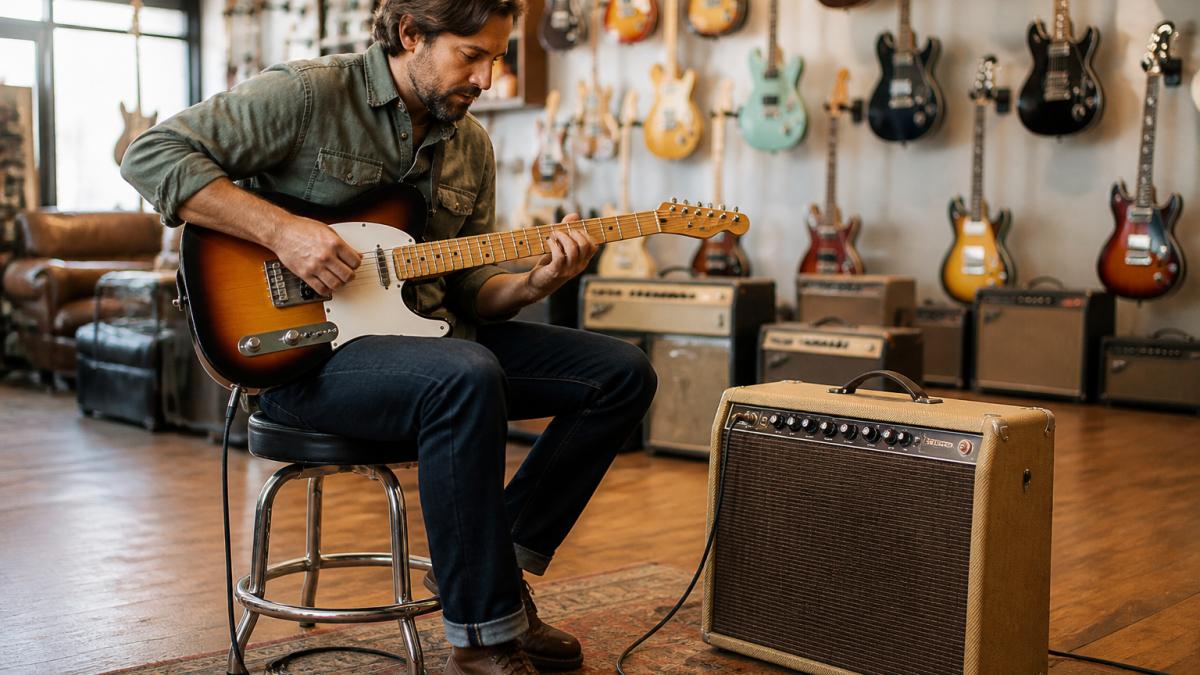
Play the amp at multiple volume levels to reveal how it behaves across its range.
Listen for note separation, dynamic range, and touch sensitivity.
Ask the dealer about EQ characteristics: does bass control affect tightness or thickness? Does treble brighten or add presence?
Are Boutique Amps Worth It? Value, Craftsmanship, and Resale
Boutique builders invest in component quality, point-to-point hand-wiring, and circuit refinement. Transformers are often custom-wound, speakers selected specifically for the circuit, and tubes are matched pairs.
This craftsmanship translates to harmonic complexity, dynamic responsiveness, and durability. A well-built boutique amp operates reliably; factory amps may require component replacement.
A boutique amplifier from a respected builder often holds its value on the used market.
Conclusion: Finding Your Signature Sound
Choosing the right boutique amplifier is ultimately about matching your playing style, playing environment, and sonic priorities to an amp that rewards how you actually play. According to research on musician gear satisfaction, players report highest satisfaction when their equipment aligns with their specific use case rather than chasing general reputation.
Test multiple amps at realistic volumes. Listen for note separation, dynamic response, and touch sensitivity. Consider total cost of ownership, including resale value and maintenance.
At South Shore Guitar Boutique, we maintain a rotating gallery of boutique and vintage amplifiers from builders who prioritize craftsmanship and tone. We also provide expert guidance on custom amp orders if you want to commission a builder to your exact specifications.
The amp you choose becomes part of your musical voice. Invest time in finding the right one, and it will reward you with years of inspiring tone and reliable performance.
Frequently Asked Questions
What makes a boutique amplifier different from mass-produced amps?
Boutique amplifiers are handmade by small builders who prioritize tone, touch sensitivity, and craftsmanship over volume production. They typically feature hand-wired circuits, premium components, and design choices that emphasize dynamic response and harmonic character. Boutique builders like Benson and Bartel focus on specific voicings and player feel rather than broad market appeal, resulting in amps with distinctive personalities suited to discerning musicians.
How many watts do you need in a boutique guitar amp?
Wattage depends on your primary use. For home practice and studio recording, 3-15 watts provides plenty of tone without excessive volume. The Bartel Swingland at 3 watts delivers full harmonic character at manageable levels. For gigging and live performance, 35+ watts offers headroom for clean tones and stage projection. Many boutique amps include power scaling, letting you drop from 35 watts to 15 or lower, giving flexibility across venues and recording sessions.
Are boutique amps worth the investment compared to standard amps?
Boutique amps justify their cost through superior touch sensitivity, note separation, and tone quality that standard amps rarely match. You're paying for hand-wired construction, premium speakers, and design refinement by experienced builders. Boutique amps also hold resale value better and offer customization options unavailable elsewhere. For serious players seeking a signature sound and long-term instrument, the investment yields returns in playability, reliability, and satisfaction.
Should I choose a tube, solid-state, or modeling boutique amp?
Tube amps deliver natural breakup, touch sensitivity, and harmonic richness prized by players valuing feel and dynamics. Solid-state amps provide reliability and consistency with less maintenance. Modeling amps offer versatility and convenience with multiple amp simulations. For boutique amplifiers, tube construction dominates because builders emphasize tone character and player responsiveness. Choose based on your priority: if tone and feel matter most, tube is the boutique standard; if reliability and variety matter more, explore solid-state or modeling options.
How do I test a boutique amp before committing to a purchase?
Test your guitar plugged directly into the amp without effects, starting at low volume to assess tone and response at manageable levels. Play both clean and overdriven channels across the full frequency range. Check how the amp responds to picking dynamics and touch sensitivity. Listen for note separation, sustain, and harmonic character. Test at different volume levels, including power-scaled settings if available. An in-person audition at a dealer like South Shore Guitar Boutique lets you compare multiple amps side-by-side under controlled conditions.
What should I consider when matching a boutique amp to my playing style?
Consider your primary genre, playing dynamics, and tonal preferences. Blues and rock players often prefer tube amps with natural breakup and warm midrange. Jazz players typically value clean headroom and note separation. Country and Americana players benefit from amp EQ flexibility. Assess whether you need a single-channel design or multiple voicing options. Test the amp's response to your picking style and how it handles both gentle and aggressive playing. A knowledgeable dealer can help match amp characteristics to your specific musical voice.
Can I get a boutique amp custom-ordered if I don't see exactly what I want in stock?
Yes. As an authorized dealer for boutique builders, South Shore Guitar Boutique offers custom order assistance. You can work with the team to specify finishes, speaker options, wattage configurations, and other details to match your exact requirements. The custom order process involves consultation to clarify your tonal goals and playing needs, coordination with the builder, and typically a lead time of several weeks to months depending on the builder's schedule. This personalized approach ensures you receive an amp tailored to your vision.
Finding your signature sound starts with hands-on evaluation. Visit South Shore Guitar Boutique to test boutique amplifiers from builders like Benson, Bartel, and Victoria in our intimate showroom setting. Our team provides personalized guidance to match you with the amp that fits your playing style, environment, and sonic goals. Schedule an appointment and discover the boutique amplifier that becomes your sound.
Leave a comment